
Armenian Parliament Rushes Electoral Code Amendments as Opposition Warns of Crackdown on Independent Election Observers
23 January 2026 Armenia’s National Assembly has convened an extraordinary session to debate controversial amendments to the Electoral Code that would significantly tighten requirements for election observation missions. The move has sparked sharp criticism from the opposition, which describes the process as anti-democratic, heavy-handed, and aimed at creating pro-government observation structures ahead of upcoming elections.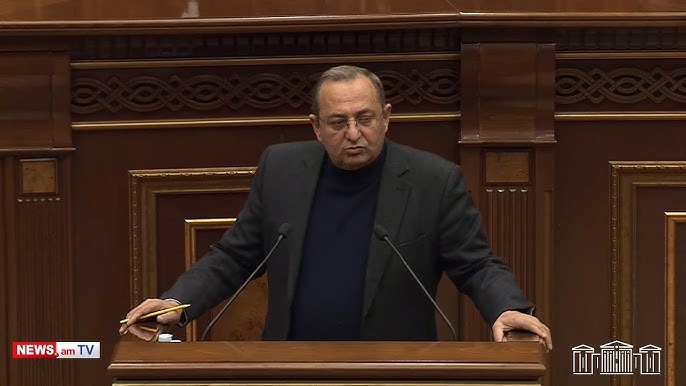
Extraordinary Session Called on Short Notice
Armenia’s National Assembly has convened an extraordinary session to debate controversial amendments to the Electoral Code that would significantly tighten requirements for election observation missions. The move has sparked sharp criticism from the opposition, which describes the process as anti-democratic, heavy-handed, and aimed at creating pro-government observation structures ahead of upcoming elections.
The extraordinary session was called with a single item on the agenda: a draft law on amendments and additions to the Electoral Code, introduced by lawmakers from the ruling Civil Contract (ՔՊ) party. The proposed changes focus on stricter requirements regarding the political neutrality of election observers and mandatory disclosure of observation missions’ funding sources.
Ruling Party: Clarifying Rules on Political Neutrality
Presenting the bill, ruling party MP Arusyak Julhakyan argued that the current legislation lacks clear and effective mechanisms to address violations of political restraint by observers.
“Observation missions are involved in the electoral process as subjects exercising public oversight. Their core mission is the independent, objective, and impartial assessment of elections,” Julhakyan said. “This objective can only be achieved if observers act in a politically neutral and unbiased manner.”
According to Julhakyan, the draft law aims to clarify existing provisions and expand enforcement mechanisms, thereby strengthening neutrality, transparency, and legal predictability in electoral processes.
Opposition Boycotts Debate, Calls Process ‘Brazen’
The opposition “Armenia” faction (Հայաստան) boycotted the debate, denouncing both the substance of the bill and the manner in which it was introduced. Opposition MP Artsvik Minasyan said lawmakers were informed only hours in advance about the National Assembly Council meeting that paved the way for the extraordinary session.
“This is yet another example of the authorities’ brazen and coercive behavior,” Minasyan told journalists on January 23. “The draft was rushed into circulation, a Council meeting was convened within hours, and today it was already placed on the agenda of an extraordinary session—without prior notice and without meaningful discussion.”
Minasyan said he and faction leader Seyran Ohanyan raised objections during the Council meeting, stressing that such a sensitive issue cannot be rushed without proper consultation.
No Consultations with Observers, Civil Society, or International Bodies
According to the opposition, the bill was drafted without engaging key stakeholders. Minasyan said no consultations were held with election observation missions—particularly those that delivered critical but impartial assessments during recent local government elections in Gyumri and Vagharshapat.
“There were no discussions with the opposition, with civil society organizations that are not aligned with the authorities, or with international bodies such as the Venice Commission and ODIHR,” he said, noting that such consultations fall within Armenia’s international obligations.
“Project to Form Pro-Government Observation Missions”
Minasyan characterized the draft amendments as a deliberate attempt to reshape the observation field.
“They will strip accreditation from observers whose assessments or statements include criticism of political forces, presenting such criticism as propaganda or counter-propaganda,” he said.
The proposed requirement for disclosure of funding sources, he added, could be used selectively. If an observer mission’s funding is deemed—even remotely—connected to a candidate or associated individual, the organization could lose its accreditation.
Central Electoral Commission Given Broad Discretion
A major concern raised by the opposition is the role assigned to the Central Electoral Commission (CEC), which would assess compliance with political neutrality requirements.
“Who is the evaluator? The CEC, which is fully under the control of the authorities,” Minasyan said. “There are no criteria in the law. None.”
He warned that the absence of clear standards would allow selective enforcement, shield pro-government observers while targeting critical ones.
Example Cited: Selective Enforcement Risk
To illustrate the risk, Minasyan cited the example of an NGO led by Daniel Ioannisyan, which he claims openly supports the ruling party.
“If I transfer money to that organization, then, assuming genuine impartiality, the CEC should strip it of observer status,” Minasyan said. “But it won’t, because the amendment gives the CEC discretion to decide who supports the authorities and who does not.”
Minasyan said he raised this issue directly with the CEC chair, who, according to him, admitted there were no clear criteria and that decisions would be made on a case-by-case basis.
Criticism Labeled as a Violation
Minasyan also stated that ruling party representatives openly acknowledged during the Council meeting that some observer missions were deemed “not impartial” during recent local elections precisely because they criticized the authorities.
“In other words, criticism itself is treated as a violation,” he said, calling this approach incompatible with democratic standards and international norms.
Venice Commission Dismissed, Opposition Says
Another flashpoint was a reported statement by National Assembly Speaker Alen Simonyan during the Council meeting.
“He said, ‘We are not interested in what the Venice Commission says. We are the Council, and we decide,’” Minasyan claimed.
The opposition had proposed postponing the process to allow for public debate, expert input, and consultations with international partners—even if the government intended to bypass the one-year rule for electoral legislation. The proposal was rejected.
Opposition Refuses Participation, Warns of Broader Implications
Citing procedural violations and lack of inclusiveness, the “Armenia” faction refused to participate in the debate.
“If the opposition is not involved in drafting amendments to the Electoral Code, this constitutes a serious flaw in the electoral process,” Minasyan said, adding that the situation calls for public mobilization and urgent corrective measures to prevent similar actions in the future.
Expedited Procedure Ahead of Elections
The draft amendments are being debated under a 24-hour expedited procedure and have already been adopted at first reading. A second extraordinary session is expected to be convened for the second reading.
While the ruling Civil Contract party argues that the urgency is justified by upcoming elections, the opposition warns that the changes risk undermining independent election observation and further eroding trust in Armenia’s electoral process.