ANC UK Presents Report to UK Parliamentary Inquiry on Artsakh
27 February 2026 During the third session of the UK Parliamentary Inquiry on Artsakh (Nagorno-Karabakh), the Armenian National Committee of the United Kingdom (ANC-UK) presented its formal witness submission to the panel examining the destruction of Armenian cultural heritage and the displacement of the population of Artsakh.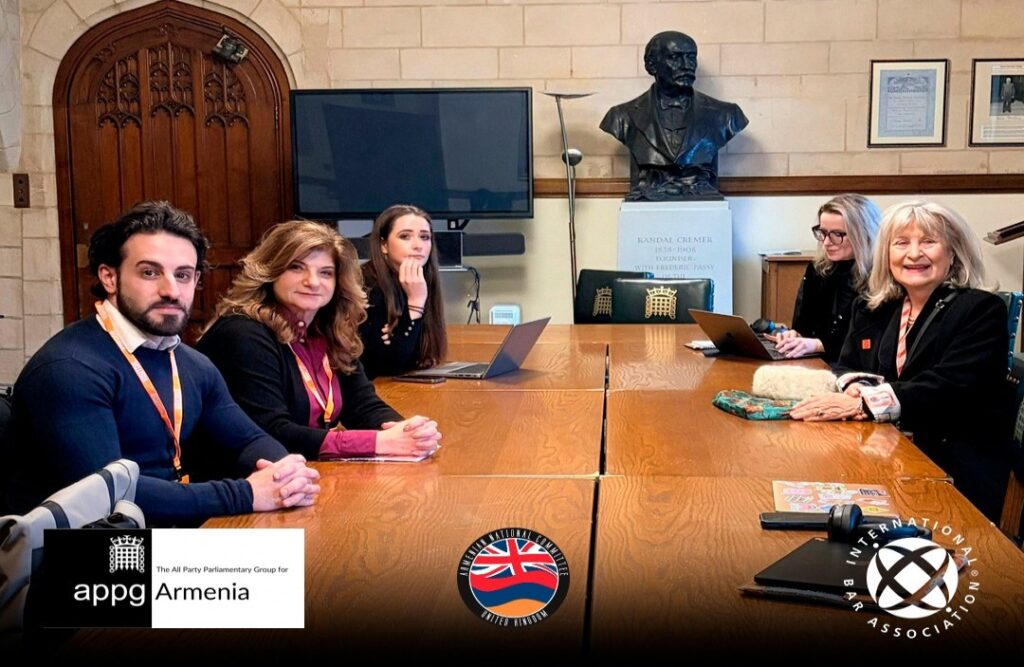
During the third session of the UK Parliamentary Inquiry on Artsakh (Nagorno-Karabakh), the Armenian National Committee of the United Kingdom (ANC-UK) presented its formal witness submission to the panel examining the destruction of Armenian cultural heritage and the displacement of the population of Artsakh.
The report outlined the legal and historical foundations relevant to the inquiry, referencing protections afforded to cultural heritage under the 1907 and 1954 Hague Conventions, the Geneva Conventions, the Rome Statute of the International Criminal Court and UN Security Council Resolution 2347. It also examined the relevance of the Genocide Convention and international jurisprudence recognizing that the deliberate destruction of cultural heritage can serve as evidence of genocidal intent.
ANC-UK’s submission analyzed what it described as a pattern of ethnic cleansing carried out in stages against the Armenian population of Artsakh.
The report was presented by Andre Vartanian, a member of ANC-UK. Together with Annette Moskofian, Chair of ANC-UK, he responded to questions from the parliamentary panel and put forward several recommendations, including calls for the United Kingdom and the international community to:
• Increase humanitarian assistance for the forcibly displaced population of Nagorno-Karabakh
• Acknowledge that Azerbaijan’s military offensive in the region, viewed in the context of the blockade and violations of humanitarian law, constituted ethnic cleansing
• Impose targeted sanctions against Azerbaijani officials responsible for the ethnic cleansing
• Publicly support the right of return of the population of Nagorno-Karabakh to their homeland in accordance with the ICJ interim measures, Article 13 of the Universal Declaration of Human Rights, Article 12 of the International Covenant on Civil and Political Rights and UN General Assembly Resolution 194
• Support the facilitation of that return through the deployment of a multinational or UN peacekeeping force to ensure the safety of the Armenian population and guarantee local self-governance
• Intensify international efforts, including through UNESCO, to protect Armenian cultural and religious heritage
• Prevent further Azerbaijani claims on the sovereign territory of Armenia and insist on the withdrawal of Azerbaijani forces from Armenian territory occupied since 2020
The session began with an online presentation from the Armed Conflict Location & Event Data Project (ACLED), an independent organization that collects and analyzes real-time data on political violence and conflict worldwide. ACLED outlined its data collection and verification methods and shared analytical findings relevant to developments on the ground in Artsakh.
The inquiry itself is being conducted under the theme “Erasing the Past: The Destruction of Cultural Heritage.” It is organized by the International Bar Association’s Human Rights Institute (IBAHRI) in cooperation with the UK Parliament’s All-Party Parliamentary Group on International Law, Justice and Accountability and the All-Party Parliamentary Group on Armenia.
The cross-party panel is chaired by Brendan O’Hara MP and includes Baroness Helena Kennedy KC, John Whittingdale MP, Jessica Morden MP, Lord McInnes, Lord Alton, and Baroness Hooper, with support from IBAHRI Programme Coordinator Áine Macdonald.
The inquiry process will include evidence gathering, public submissions, hearings, the publication of a final report and engagement with the UK Government as well as international institutions.
More information about the inquiry can be found here:
https://www.nagornokarabakhinquiry.com/