
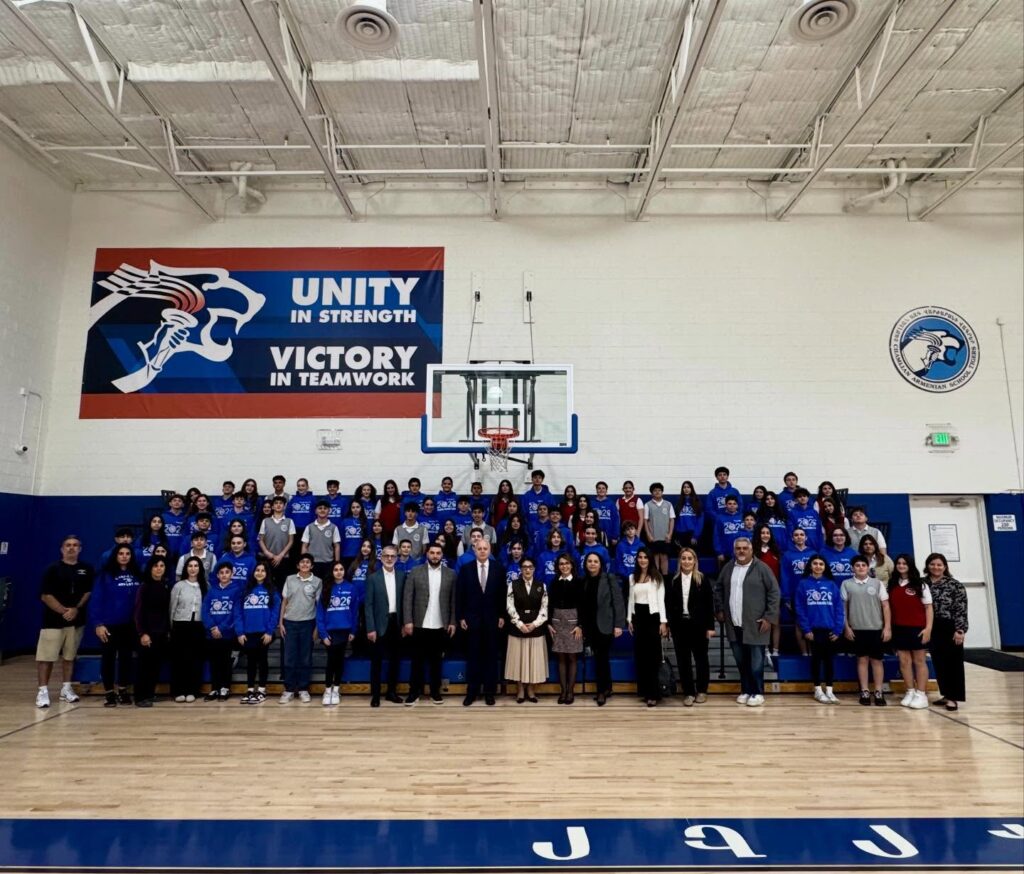
Lilit Galstian — ARF Bureau member, member of the Armenian National Assembly, diplomat, academic, and writer — spent two weeks immersed in the life of the diaspora. Her visit was not symbolic theater; it was substantive engagement.
From preschool classrooms to high school gymnasiums, from student-athletes on the basketball court to veteran volunteers in community centers, she encountered the full spectrum of organized Armenian-American life. She engaged parents. She listened to educators. She held discussions with community leaders and public officials. She convened high-level meetings with Homenetmen Regional and Chapter Executives — representing one of the largest Armenian diaspora organizations in the world. The message was unmistakable: Armenia and the diaspora are interdependent. Leadership requires presence. Legitimacy requires engagement.
Galstian showed up.
Then came a second visit.
Lilit Makunts — former Ambassador to the United States and now Special Advisor to Prime Minister Nikol Pashinyan — arrived in Southern California alongside Arayik Harutyunyan, Chief of Staff to Prime Minister Pashinyan. Their visit unfolded under markedly different circumstances.
There were no open community forums. No structured engagement with major diaspora institutions. No broad outreach to schools, youth organizations, or established civic groups that anchor Armenian-American public life.
Two senior figures from the Prime Minister’s inner circle came to the largest Armenian diaspora community in the world — and actively avoided its institutional leadership. This was entirely on brand for Makunts, who had previously failed, even as Ambassador, to cultivate trust or substantively engage with any Armenian-American community.
The contrast between these two women, who share the same first name and nothing else, is highly instructive.
For outside observers, this is not merely “community politics.” It is a question of representation, mandate, and legitimacy. Makunts and Harutyunyan did not engage the broader community. Instead, they confined themselves to a tight circle of opportunistic, access-driven individuals whose interests reflect personal positioning, not an authentic community mandate.
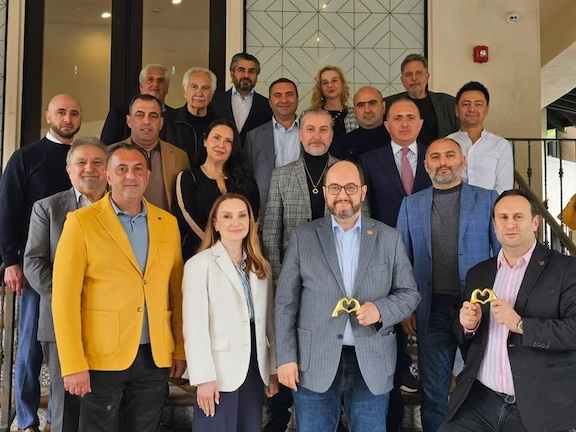
Makunts and Harutyunyan seek to portray themselves as central actors within Armenia’s current governing regime. They are associated with policy decisions that have weakened Armenia’s security posture, diluted core national priorities, and undermined Armenia’s democratic institutions. Moreover, the positioning they actively promote is increasingly perceived as mirroring the preferences of neighboring authoritarian leaders like Aliyev and Erdogan. Seen in this light, Makunts and Harutyunyan’s authority appears fundamentally compromised.
When senior Armenian officials actively bypass the most established and politically active Armenian-American institutions, it raises questions about legitimacy. The Armenian-American diaspora is organized, politically sophisticated, and deeply invested in Armenia’s sovereignty and security. Its institutional voice carries weight — in advocacy networks, in policy circles, and in elections.
That is why Galstian’s visit resonated. She did not arrive quietly. She did not confine herself to friendly rooms behind closed doors. She met the community where it lives — in its schools, its civic organizations, its youth programs, and its institutional leadership. Leadership is defined by the willingness to stand openly before your people — and with your people. One of these visits reflected that principle.
The other did not.
Mrs. Galstian — and any leader willing to defend Armenia’s national interests, safeguard its security, and engage the community with transparency and respect — will always be welcomed.
Sarig Armenian is an attorney, writer, and public advocacy strategist based in Los Angeles, California. Having served in both the legislative and judicial branches of the US government, she is actively involved in legal and community-based efforts focused on justice, accountability, and the protection of Armenian rights.