
Artur Khachatryan Rejects Claims of Armenia-Azerbaijan “Peace,” Calls Current Situation a Fragile Ceasefire
09 October 2026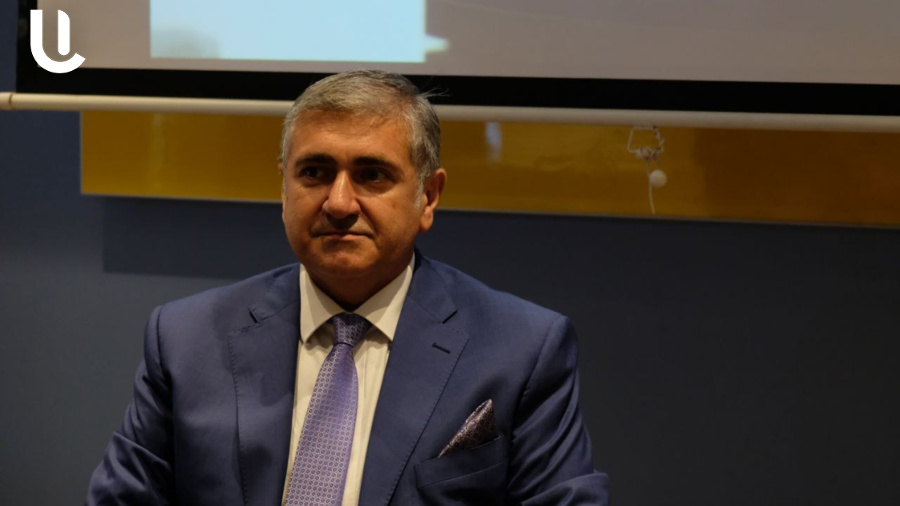
Armenia Alliance parliamentary faction MP Artur Khachatryan has rejected claims that Armenia and Azerbaijan have entered a period of peace, arguing instead that the current situation amounts to a fragile ceasefire accompanied by continuing pressure on Armenia.
Speaking in an interview with Aravot.am, Khachatryan addressed recent remarks by Belarusian President Alexander Lukashenko, Nikol Pashinyan’s renewed references to the Alma-Ata Declaration, and developments surrounding regional transport arrangements.
Khachatryan was responding in part to Lukashenko’s remark to Pashinyan during a group photo at the CIS heads of state meeting in Ashgabat, where the Belarusian leader joked, “You won’t get away from us anywhere.” Pashinyan was standing between Lukashenko and Azerbaijani President Ilham Aliyev at the time.
Khachatryan said he did not wish to dwell on the exchange, but recalled that Pashinyan himself had recently acknowledged during a meeting with Russian President Vladimir Putin in Bishkek that Armenia currently has “no alternative.” He also referenced earlier remarks by Lukashenko suggesting that Pashinyan had been forced to deal with circumstances created by his predecessors.
Turning to Pashinyan’s statements on the Alma-Ata Declaration, Khachatryan accused him of distorting the historical circumstances surrounding the collapse of the Soviet Union and the creation of the Commonwealth of Independent States.
According to Khachatryan, the CIS was established through the Belovezh Accords signed on December 8, 1991, while the Alma-Ata Declaration was adopted later, on December 21. He argued that the dissolution of the Soviet Union and the emergence of independent states therefore cannot be attributed to the Alma-Ata Declaration.
Khachatryan also challenged Pashinyan’s interpretation of the declaration as establishing former Soviet administrative boundaries as interstate borders.
“The Alma-Ata Declaration contains no map and no unequivocal provision stating that the former Soviet republics recognized their administrative boundaries as state borders,” Khachatryan told Aravot.am.
He further argued that Azerbaijan’s later relationship with the CIS complicates attempts to present the declaration as a definitive basis for Armenia-Azerbaijan border delimitation.
Khachatryan was also critical of Pashinyan’s assertion that Armenia and Azerbaijan have effectively experienced two years of peace.
“If the threat of war remains so serious that even the use of a place name can supposedly provoke conflict, then what peace are we talking about?” he said. “At most, we can speak of a fragile ceasefire.”
He argued that Armenia should focus on strengthening its defense capabilities and developing alliances rather than portraying the absence of large-scale fighting as an established peace.
Khachatryan also raised concerns over what he described as an imbalance in regional transport arrangements, particularly regarding the Trump Route for International Peace and Prosperity, or TRIPP.
He said Armenia has already committed to providing Azerbaijan with unobstructed connectivity between mainland Azerbaijan and Nakhijevan, while, in his view, there is still no equally detailed mechanism guaranteeing Armenia comparable transit through Azerbaijani territory.
Khachatryan pointed to the institutional framework being developed around TRIPP and questioned whether Azerbaijan has undertaken similarly concrete obligations regarding Armenia’s own regional connectivity.
“We provide Azerbaijan with a corridor through a documented arrangement, while placing our hopes on Aliyev’s goodwill or on a promise that someday Armenia will receive a road in return,” he told Aravot.am.
Khachatryan concluded that the current Armenia-Azerbaijan relationship should not be characterized as peace, but rather as “a fragile ceasefire” accompanied by what he described as continuing asymmetry and pressure on Armenia.